
Meta Data Management
It's Time to Make Your Data Understandable, Searchable, and Actually Useful
Give your teams the context they need to find, understand, and trust your data. We help you establish clear metadata structures, business definitions, and classification frameworks across your data ecosystem so teams can work with data confidently without depending on the few people who originally built it.
At Acquirets, we help enterprises design and implement end-to-end metadata management programs that bring clarity, consistency, and accountability to your entire data ecosystem — so your teams move faster, your data assets become self-explanatory, and your AI investments are built on data that is properly understood and correctly used.

Data Catalogs
Centralize and organize your data assets with searchable catalogs, making it easy for teams to discover, understand, and use the right data quickly.
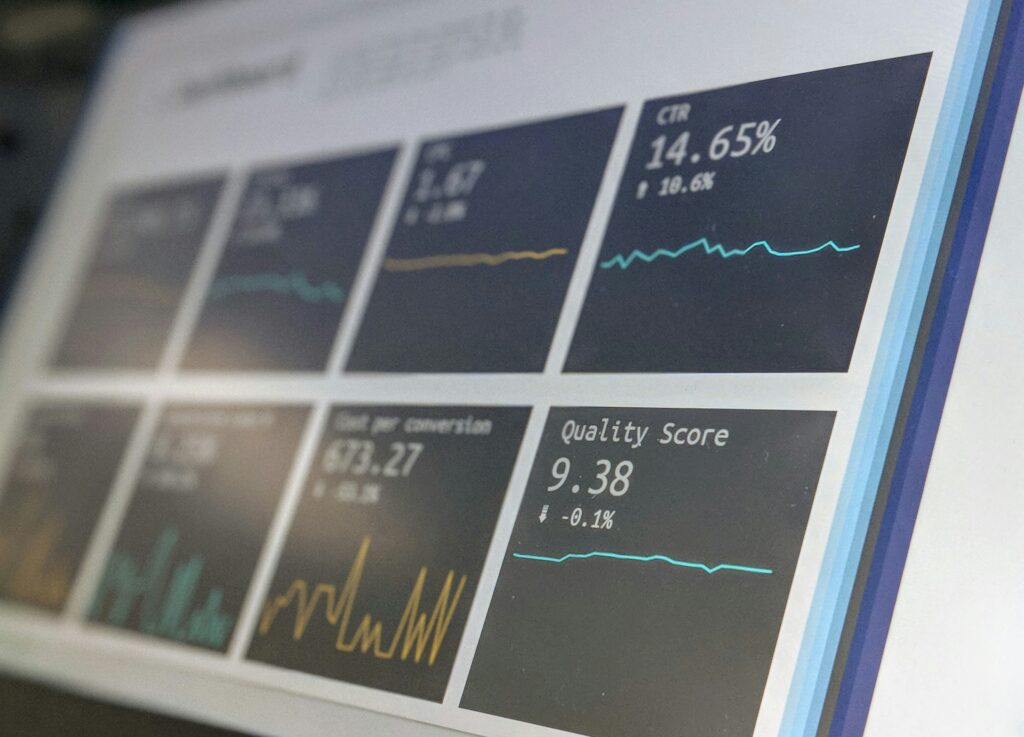
Data Quality
Ensure your data is accurate, consistent, and reliable through validation, monitoring, and continuous quality checks.

Data Lineage
Track how data flows across systems, from source to destination, ensuring transparency, traceability, and easier impact analysis.

Master Data Management
Create a single, consistent source of truth for critical business data like customers, products, and vendors across all systems.

Data Governance Tools
Implement the right tools to automate governance processes, enforce policies, and maintain control over your data environment.
The Hidden Cost of Poor Metadata Management
Most enterprises don’t realize how much undocumented, unstructured metadata is slowing their teams down until the symptoms become impossible to ignore.
When metadata management is absent or inconsistent, the consequences compound quickly. Analysts spend hours tracking down the person who knows what a field actually means instead of doing analysis. Business leaders make decisions based on metrics nobody can fully define or trace back to a source. Data engineers duplicate work already done by other teams because there is no shared record of what exists or where. AI and machine learning models trained on data with no documented context produce outputs that cannot be explained, audited, or defended. And when a compliance review arrives, the scramble to classify sensitive data and demonstrate regulatory controls becomes a costly, time-consuming emergency.
The risks are not abstract.
GDPR, CCPA, and HIPAA all require organizations to know what personal and sensitive data they hold, where it is stored, and how it is classified. Without metadata management, that knowledge does not exist in any systematic form. Unclassified sensitive data gets copied, shared, and stored in places it should never reach. AI models consume data whose meaning and sensitivity nobody has documented, creating compliance exposure that compounds with every deployment. And in a competitive landscape where data-literate organizations move faster and build better, enterprises where nobody agrees on what their data means fall further behind every quarter. Poor metadata management is not a data team problem. It is a business problem.
What is Metadata Management and Why Does It Matter Now?
Metadata management is the discipline of capturing, organizing, and maintaining the context that makes data understandable and usable — business definitions, data dictionaries, technical schemas, ownership records, and classification taxonomies that give every data asset a consistent, documented meaning across your entire organization. As data environments grow more complex and AI systems depend on correctly understood inputs, knowing what your data means is just as important as knowing where it is.
It answers four fundamental questions every enterprise must be able to answer
What does this data actually mean?
Who owns it and who can use it?
Is everyone working from the same definition?
Is it documented well enough to trust?
A well-implemented metadata management program delivers measurable outcomes across the organization. It reduces the time teams spend searching for data and chasing down definitions. It accelerates regulatory compliance by making sensitive data classification systematic and auditable. It shortens the time analysts spend validating whether a metric means what they think it means. And critically, it creates the documented, well-understood data foundation that modern AI and analytics systems depend on to produce outputs teams can actually explain and defend.

Our Metadata Management Services
We offer a complete, integrated suite of metadata management services designed for enterprise environments. Each capability works independently or as part of a broader data governance and AI readiness program, depending on where your organization is in its journey.
Business Glossary & Data Dictionary Implementation
A business glossary and data dictionary give your organization a single, authoritative reference for every data term, metric, and field definition across your systems, databases, reports, dashboards, and analytical models.
Without them, definitional inconsistency is a daily operational problem. Two analysts run the same report and get different numbers because they are using the same term to mean different things. A new data engineer spends days figuring out what a field contains because nothing is documented. Business stakeholders distrust dashboards because nobody can explain how the metrics are calculated. A well-implemented business glossary and data dictionary solves this by creating a shared, searchable reference layer that connects business terms to their technical definitions, source systems, owners, and usage context across the entire organization.
What we deliver
We design and deploy enterprise business glossaries and data dictionaries that integrate with your existing data catalog or warehouse, standardize term definitions across business units, and give every team a searchable, trusted reference for the data they work with daily. For a financial services client managing over four hundred defined metrics across twelve business units, implementing a centralized business glossary reduced definition disputes and report rework by over 65% within the first two quarters of deployment.


Data Classification & Sensitivity Tagging
Every downstream compliance decision, access control, and AI deployment is only as reliable as the classification of the data feeding it. Data classification ensures your data assets are tagged, categorized, and labeled according to their sensitivity, regulatory status, and business criticality — continuously, not just at the point of initial ingestion.
What we deliver
Our data classification practice covers the full metadata lifecycle: profiling your data assets to identify sensitive, regulated, and business-critical content, designing classification taxonomies and sensitivity labeling frameworks that align with your regulatory requirements and internal policies, implementing automated classification pipelines that tag data at scale across your systems and warehouses, and setting up alerts when unclassified or misclassified data is detected. We also implement classification scorecards that give data owners, compliance teams, and business stakeholders real-time visibility into the classification health of the data environments they are responsible for.
For enterprises preparing for GDPR, HIPAA, or AI deployments, knowing what data you have and how sensitive it is represents the non-negotiable first step. Unclassified data is not a metadata problem, it is a compliance and security liability we help organizations resolve from day one.
Metadata Architecture & Technical Schema Management
Do you know exactly what technical metadata exists across your databases, pipelines, and warehouses, how it is structured, and whether the schemas your teams depend on are documented and version-controlled? If not, your technical metadata is an active operational gap.
Technical schema management provides a structured, maintained record of how your data is physically organized across every system — table structures, field definitions, data types, relationships, and transformation logic at every layer. This documentation is essential for system migrations (teams need verified schema maps before touching production environments), impact analysis (understanding what downstream systems break when a schema changes), and AI readiness (models need documented, stable input schemas to produce consistent and explainable outputs).
What we deliver
We implement automated technical metadata capture across your databases, data warehouses, pipelines, and transformation layers — giving your data engineers, architects, and analysts a continuously updated, searchable record of your technical schema landscape without the manual effort of documentation. Schema changes are tracked automatically, relationships between systems are mapped at field level, and every structural change is versioned so your teams always know what changed, when it changed, and what depends on it.
Data Catalog Implementation
A data catalog is the searchable, centralized inventory that makes your metadata accessible and useful. Without it, your organization’s data assets are tables and fields without context, findable only by the engineers who built them and invisible to the analysts and business users who need them daily.
Data catalog implementation involves deploying and populating a searchable metadata layer that connects every data asset to its business definition, technical schema, ownership record, classification tag, and usage context. It ensures that when a data analyst and a business stakeholder both search for “active customers,” they find the same verified, documented dataset, not five different tables with similar names and no explanation of which one is correct.
What we deliver
We help enterprises select, deploy, and populate data catalogs that integrate with your existing data stack, ingest metadata automatically from your warehouses, pipelines, and BI tools, support business glossary integration and PII tagging for regulatory compliance, and create a self-service metadata environment your teams can actually navigate and trust without engineering support for every search.
Metadata Ownership & Data Stewardship
Undocumented ownership, unclear accountability, and unassigned stewardship roles are one of the most persistent reasons metadata programs fail after implementation. Metadata ownership and data stewardship resolves this by establishing clear, enforceable accountability for every data asset across your organization so metadata stays accurate, current, and trusted over time.
What we deliver
Our metadata stewardship practice covers business data stewards, technical data owners, and domain custodians across your data landscape. We design stewardship frameworks that assign ownership at dataset, domain, and field level, define stewardship responsibilities and review cadences for each role, implement stewardship workflows inside your data catalog or governance platform, and create escalation paths for metadata disputes, quality issues, and classification decisions that arise as your data environment evolves.
The downstream impact is significant: metadata that stays accurate without relying on a single person to maintain it, faster resolution of data quality and definition disputes, cleaner analytics built on data assets with verified owners, and a materially reduced risk of metadata debt accumulating silently across your systems.

Metadata Tools & Platform Implementation
A metadata management program is only sustainable at enterprise scale when it is automated and enforced by the right tooling. We help enterprises evaluate, select, and implement metadata platforms that capture, organize, and maintain your business glossaries, data catalogs, and classification frameworks continuously — making metadata management an always-on capability rather than a periodic manual effort.
What we deliver
We have hands-on implementation experience with leading metadata and data catalog platforms including Collibra, Atlan, Alation, Microsoft Purview, and Apache Atlas. Our approach is vendor-neutral: we recommend the tools that fit your environment, data stack, and metadata maturity level, not the tools we happen to be partnered with. We also handle full integration architecture, ensuring your metadata platform connects to your data warehouse, cloud storage, ETL pipelines, BI layer, and source systems for seamless, automated metadata capture and classification across every data asset your organization depends on.
How We Implement Metadata Management: Our 4-Phase Approach
Metadata management programs fail most often not because of technology, but because of poor scoping, insufficient stakeholder alignment on definitions, and lack of a structured rollout plan. Our proven delivery model is designed to de-risk implementation at every stage and get your teams working with accurate, searchable, trusted metadata as fast as possible.
Phase 1: Assessment and Discovery
Phase 2: Metadata Architecture & Standards Design
Phase 3: Implementation and Integration
Phase 4: Monitoring and Optimization
Why Enterprises Choose Acquirets for Metadata Management
Vendor-Neutral by Design
We don't push platforms. We assess your metadata landscape, recommend the catalog and metadata tooling that fits your data environment and maturity level, and implement what works. Our advice is driven by your requirements, not by partner incentives.
Built for AI Readiness
Every metadata program we deliver is designed with AI and ML workloads in mind. Documented business definitions, classified sensitive data, verified technical schemas, and consistent data dictionaries are not just good metadata hygiene — they are the foundational requirements for AI systems that produce outputs teams can explain, audit, and defend.
Enterprise-Grade Delivery
We have deep experience working within the complexity of large organizations: multi-cloud environments, hybrid data architectures, cross-domain metadata landscapes, regulatory classification requirements, and multi-stakeholder alignment challenges. Our delivery model is structured to handle that complexity without disrupting your ongoing operations.
Cross-Industry Experience
Our team has implemented metadata management programs across financial services, healthcare, retail, manufacturing, technology, and the public sector. We bring industry-specific knowledge of regulatory classification requirements, data definition patterns, and organizational metadata dynamics that generic consulting firms don't.
Long-Term Partnership
We don't implement metadata management and disappear. We offer ongoing metadata monitoring, stewardship support, catalog management, and classification coverage expansion for enterprises that want a strategic partner rather than a one-time vendor.
Metadata Management Across Industries
Financial Services Governance
Metadata management programs built to satisfy MiFID II, SOX, and BCBS 239 requirements — with documented data lineage, classified sensitive fields, and audit-ready data dictionaries that give regulators the transparency they require and internal teams the definitions they depend on.
Healthcare and Life Sciences
HIPAA-compliant metadata programs with PHI classification, sensitivity tagging, and data dictionary frameworks that ensure clinical, operational, and research data is correctly defined, documented, and accessible only to the teams authorized to use it.
Retail and E-commerce
Metadata management across product, customer, and inventory data that powers consistent definitions, accurate personalization, and reliable reporting — ensuring every team works from the same documented understanding of the data driving their decisions.
Manufacturing Operational
Metadata frameworks spanning IoT, ERP, and supply chain systems — ensuring operational data is documented, classified, and consistently defined across facilities, systems, and reporting layers to support reliable analytics and predictive maintenance programs.
Technology and SaaS
Metadata management frameworks that scale with product and customer data growth, support multi-tenant data documentation requirements, and give engineering and compliance teams a consistent, searchable metadata layer across every environment and data domain they manage.
Government and Public Sector
Metadata programs aligned with public sector transparency mandates, data sharing requirements, and security classification standards — including sensitivity tagging, access documentation, and audit-ready metadata controls designed to meet FedRAMP-relevant requirements.
Related Services
Data governance
Metadata management and data governance are inseparable. Metadata provides the documented definitions, ownership records, and classification frameworks that make governance policies enforceable and auditable. Our data governance practice builds the organizational structures and controls that give your metadata program its authority and staying power.
AI Services
Documented, classified metadata is the prerequisite for explainable AI. Our AI services practice builds on the metadata foundation you establish, delivering private LLM systems, AI-powered automation, and enterprise AI deployments that you can trust because the data feeding them is correctly defined, classified, and understood
Cybersecurity Solutions
Metadata management and cybersecurity work together. Accurate classification of sensitive and regulated data is the foundation of effective access controls, data loss prevention, and security architecture. Our cybersecurity practice ensures the sensitivity labels and ownership records your metadata program defines are enforced and protected at the infrastructure level.
Data Engineering and AI Readiness
Well-documented metadata depends on well-structured pipelines and reliable data infrastructure. Our data engineering practice ensures your ingestion, transformation, and warehouse layers are built to support automated metadata capture from the ground up.
Data Lineage
Metadata tells you what your data means. Data lineage tells you where it came from and how it moved. Our data lineage practice works alongside metadata management to give your teams both the context and the traceability they need to trust every data asset across your environment.
AI Governance and Risk Management
For enterprises deploying AI, metadata extends beyond definitions into model input documentation, training data context, and output explainability. Our AI governance practice addresses these requirements, ensuring the data feeding your AI systems is correctly classified, documented, and traceable from source to output.

Frequently Asked Questions About Metadata Management
Metadata management is the discipline of capturing, organizing, and maintaining the context that makes data understandable and usable across an organization — including business definitions, data dictionaries, technical schemas, ownership records, classification taxonomies, and sensitivity labels. It ensures that when any team, system, or AI application references a data asset, they have access to a documented, consistent, and accurate description of what that data is, where it came from, who owns it, and how it should be used.
Data governance defines the policies, ownership structures, and standards that determine how data should be managed across an organization. Metadata management is the operational discipline that implements those standards at the asset level — capturing, documenting, and maintaining the definitions, classifications, and context for every data asset your teams work with. Governance sets the rules. Metadata management makes those rules visible, searchable, and enforceable at the data asset level. Both are necessary and the strongest data programs run them together.
It depends on the number of data domains in scope, the complexity of your data environment, and how much metadata documentation currently exists. For organizations starting with a focused scope such as a business glossary or data dictionary for a single domain, an initial implementation typically takes six to ten weeks. Broader programs covering classification, technical schema management, and catalog deployment across multiple domains take longer. Our phased approach is designed to deliver searchable, trusted metadata on your highest-priority domain quickly rather than requiring a full enterprise rollout before any value is realized.
We have hands-on implementation experience with Collibra, Atlan, Alation, Microsoft Purview, and Apache Atlas, among others. Our approach is vendor-neutral. We assess your existing data stack, metadata maturity, regulatory requirements, and team capabilities before recommending a platform. We do not push tools based on partnerships. We recommend what actually fits your environment and long-term metadata management needs.
GDPR requires organizations to know what personal data they hold, how it is classified, and how it is processed. HIPAA requires documented controls over protected health information including where it is stored, who can access it, and how it is used. Without metadata management, answering these questions requires manual investigation across multiple systems. A properly implemented metadata program makes sensitive data classification systematic and auditable — every personal or regulated data field is tagged, documented, and traceable across your environment, making compliance responses accurate, complete, and defensible without manual reconstruction.
A business glossary is a centralized, searchable catalog of defined business terms, metrics, and data concepts used across your organization — including what each term means, how it is calculated, which systems it appears in, and who owns the definition. Without one, the same term means different things to different teams. Finance and sales calculate revenue differently. Two dashboards show different numbers for the same metric. A business glossary resolves this by establishing a single, agreed definition for every term your teams rely on, reducing reporting disputes, speeding up analysis, and giving new team members immediate context for the data they work with.
AI models depend on correctly understood, well-documented data inputs to produce reliable and explainable outputs. Without metadata management, the data feeding your AI systems may be inconsistently defined, incorrectly classified, or simply undocumented — making it impossible to explain what the model learned from or why it produced a given output. Metadata management ensures that every data asset used in AI training and inference has a documented definition, a verified classification, a known owner, and a traceable origin. This makes AI outputs more reliable, audit reviews more manageable, and regulatory compliance more defensible for organizations operating AI in regulated environments.
Yes. Metadata environments are not static. New data sources are added, new regulatory requirements emerge, and metadata quality degrades without active stewardship. We offer ongoing metadata monitoring, classification coverage expansion, stewardship workflow management, and catalog platform maintenance after implementation. This includes regular metadata completeness reviews, updates to business glossaries and data dictionaries as definitions evolve, and coverage expansion as new systems and domains are brought into scope.
Yes. We implement metadata management programs across cloud-native, on-premises, and hybrid environments. Whether your data infrastructure runs on AWS, Azure, Google Cloud, or spans a combination of cloud and legacy on-premises systems, our metadata architecture is designed to capture and maintain metadata across the full environment. Multi-cloud and hybrid deployments require careful integration design to ensure metadata stays synchronized and complete across all systems, which is a core part of our assessment and architecture phases.
The first step is a discovery call where we learn about your current data environment, the metadata gaps causing the most operational or compliance pain, and where you want to start. From there we scope an assessment engagement that gives you a clear picture of your metadata completeness, definition consistency, classification coverage, and a recommended implementation path by domain priority. There is no obligation beyond the initial conversation. You can book a free consultation directly from this page.
Ready to Build a Metadata Foundation Your Organization Can Actually Use?
Poor metadata management is not a technology problem waiting for a better catalog tool. It is an organizational challenge that requires the right standards, the right stewardship structure, and the right partner to solve it durably.
Acquirets brings the enterprise experience, the vendor-neutral perspective, and the implementation discipline to help you build a metadata program that works — one that your data teams, your business leaders, your regulators, and your AI systems all depend on with confidence.
Get In Touch
Address
2321C S Providence Road, Columbia, Missouri, USA
Call Us
(573) 8103346
Email Us
info@acquirets.com