
Data Catalogs
Enterprise Data Catalog Services for Governed, Searchable, and Trusted Data
Turn scattered data assets into a centralized, searchable, and well-governed data catalog. Acquirets helps enterprises organize metadata, define ownership, improve data discovery, and give teams the confidence to find, understand, and use trusted data across the business.
From metadata management and business glossaries to data lineage, access visibility, quality indicators, and AI-ready governance, we design data catalog frameworks that bring clarity to your data ecosystem and prepare your organization for analytics, automation, compliance, and secure AI adoption.

Data Lineage
Track how data flows across systems, from source to destination, ensuring transparency, traceability, and easier impact analysis.
Meta Data Management
Manage and standardize data definitions, structures, and context to improve data understanding, governance, and usability.

Master Data Management
Create a single, consistent source of truth for critical business data like customers, products, and vendors across all systems.

Data Governance Tools
Implement the right tools to automate governance processes, enforce policies, and maintain control over your data environment.

The Hidden Cost of Uncataloged Enterprise Data
When data assets are scattered across systems, reports, databases, cloud platforms, and business applications, teams waste valuable time searching for the right information. Analysts duplicate work, data engineers answer the same questions repeatedly, and business leaders make decisions without knowing which data source is accurate or approved.
Without a structured enterprise data catalog, metadata remains incomplete, ownership is unclear, data lineage is difficult to trace, and governance teams struggle to prove compliance. Over time, poor data discovery slows analytics, weakens reporting confidence, increases operational risk, and limits the value of AI and automation initiatives.
The Risks of Uncataloged Data Are Not Abstract
Without a clear enterprise data catalog, teams lose visibility into where data lives, who owns it, and whether it can be trusted. Poor metadata, limited data lineage, and unclear access controls increase compliance risk, weaken reporting confidence, and slow AI adoption. Uncataloged data is not just a data team problem. It is a business problem.
What Is a Data Catalog and Why Does It Matter Now?
A data catalog creates a searchable, governed inventory of your enterprise data assets, including metadata, ownership, definitions, lineage, and usage context. It helps teams find trusted data faster, reduce duplicate work, improve compliance, and prepare reliable data for analytics, automation, and AI.
It Answers Four Fundamental Questions Every Enterprise Must Be Able to Answer
What data do we have?
Where does it come from?
Who is responsible for it?
And can we trust it?
A well-implemented data catalog delivers measurable outcomes across the organization. It reduces the time teams spend searching for data and questioning its accuracy. It creates clear ownership so nothing falls through the cracks. It accelerates AI readiness by ensuring models are trained on clean, documented, trusted data. And critically, it gives every team technical and business alike the confidence to act on data without second-guessing where it came from.

Our Data Catalog Services
We offer a complete, integrated suite of data catalog services designed for enterprise environments. Each capability works independently or as part of a broader data engineering and AI readiness program, depending on where your organization is in its journey.
Data Catalog Implementation
A data catalog gives your organization a single, searchable inventory of every data asset across your systems databases, data lakes, pipelines, APIs, reports, and more.
Without a catalog, data discovery is a daily struggle. Analysts spend hours hunting for the right dataset, duplicating work already done by other teams, or unknowingly using outdated data. A well-implemented data catalog solves this by creating a governed, business-friendly index of your data assets complete with descriptions, ownership, classification, and usage context.
What we deliver
We design and deploy enterprise data catalogs that integrate with your existing stack, support business glossary management, and enable teams to find, understand, and trust their data in minutes rather than days. For a large financial services client managing hundreds of data domains, a properly deployed catalog reduced data discovery time by over 60%.


Data Asset Discovery & Metadata Management
Most organizations don’t have a clear picture of what data they actually hold. Assets are spread across databases, cloud storage, BI tools, and internal systems — undocumented and disconnected. Data asset discovery changes that by systematically identifying, cataloging, and enriching every data asset with the metadata teams need to find and use it confidently.
What we Offer
Our data asset discovery practice covers the full scope: scanning and inventorying your existing data sources to establish a complete asset register, capturing technical and business metadata for each asset, assigning ownership and stewardship roles, and building searchable catalog structures so any team member can locate the right data in seconds. We also implement automated metadata refresh pipelines so your catalog stays current as data environments evolve.
For enterprises preparing AI or analytics programs, a fully documented data inventory is the non-negotiable first step. You cannot govern, analyze, or train models on data you cannot find or describe. We help organizations build that foundation from day one.
Data Lineage Tracking
Do you know exactly where a piece of data came from, what systems it passed through, and which reports or AI models depend on it today? If not, that is a critical gap in your data catalog.
Data lineage provides a transparent, auditable map of how data flows through your organization from source systems through transformation layers to analytical outputs and model inputs. This visibility is essential for compliance, where regulators increasingly require proof of data origin and handling. It is equally important for impact analysis, understanding what breaks when an upstream source changes, and for root-cause investigation when data quality issues surface unexpectedly.
What we deliver
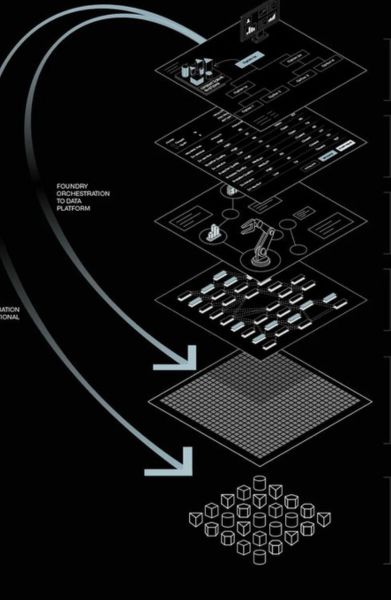
We implement automated lineage capture across your data pipelines, warehouses, and transformation layers giving your teams, auditors, and data owners a complete data trail without the overhead of manual documentation. Every data asset in your catalog carries a full history of where it came from and where it goes.

Metadata Management
Metadata is the context that makes data useful. Without it, your organization’s data assets are columns and tables without meaning, interpretable only by the engineers who built them and invisible to the business users who need them.
Metadata management involves establishing and maintaining business glossaries, data dictionaries, technical schemas, and classification taxonomies that give every data asset a consistent, understandable definition across the enterprise. It ensures that when a data analyst and a finance team both reference “revenue” or “active customer,” they are measuring exactly the same thing.
What we deliver
We help enterprises design and implement metadata management programs that standardize definitions across business units, support regulatory classification requirements such as PII tagging for GDPR and CCPA compliance, and integrate directly with your data catalog to create a self-service data environment your teams can actually use — without filing a ticket or waiting on engineering.
Data Quality Management
Duplicate records, inconsistent field values, missing ownership tags, and stale entries are among the most expensive and persistent problems inside enterprise data environments. A data catalog without quality controls is just an inventory of unreliable assets. Data quality management ensures every asset cataloged meets defined standards for accuracy, completeness, consistency, and freshness — continuously, not just at the point of ingestion.
What we deliver
Our data quality practice covers profiling your cataloged assets to establish quality baselines, designing validation and cleansing rules at the pipeline level, implementing automated monitoring that flags degradation before it reaches downstream systems, and building data quality scorecards that give asset owners and business stakeholders real-time visibility into the health of the data they rely on.
The downstream impact is direct: cleaner analytics, more reliable AI model outputs, faster reconciliation across teams, and significantly less time spent by engineers firefighting data issues that should never have reached production.


Data Catalog Tools & Platform Implementation
A data catalog is only as effective as the platform powering it. Choosing the wrong tool for your environment, or implementing the right tool without proper configuration and integration, results in a catalog nobody uses. We help enterprises evaluate, select, and implement data catalog platforms that operationalize your metadata strategy. making catalog management a continuous, automated process rather than a manual one-time project.
What we deliver
We have hands-on implementation experience with leading platforms including Microsoft Purview, Collibra, Alation, Atlan, DataHub, and Apache Atlas. Our approach is vendor-neutral: we recommend the platform that fits your existing stack, budget, and organizational maturity, not the one we happen to prefer. We handle the full implementation scope, including connector configuration, metadata ingestion pipelines, role-based access setup, and integration with your data warehouse, cloud storage, ETL pipelines, and BI layer, so your catalog is live, populated, and usable from day one.
How We Implement a Data Catalog: Our 4-Phase Approach
Data catalog programs fail most often not because of technology, but because of poor planning, insufficient stakeholder alignment, and lack of phased execution. Our proven delivery model is designed to de-risk implementation at every stage.
Phase 1: Assessment and Discovery
Phase 2: Catalog Design and Architecture
Phase 3: Implementation and Integration
Phase 4: Monitoring and Optimization
Why Enterprises Choose Acquirets for Data Catalog Services
Vendor-Neutral by Design
We don't push platforms. We assess your environment, recommend what fits, and implement what works. Our advice is driven by your requirements and your stack, not by partner incentives or reseller margins.
Built for AI Readiness
Every data catalog we implement is designed with AI and ML workloads in mind. Clean metadata, documented lineage, validated data quality, and trusted asset ownership aren't just good catalog hygiene, they are the foundational requirements for AI systems that perform reliably in production.
Enterprise-Grade Delivery
We have deep experience working within the complexity of large organizations: multi-cloud environments, hybrid data architectures, regulatory constraints, and multi-stakeholder alignment challenges. Our delivery model is structured to handle that complexity without disrupting your ongoing operations.
Cross-Industry Experience
Our team has implemented data catalog programs across financial services, healthcare, retail, manufacturing, technology, and the public sector. We bring industry-specific knowledge of data patterns, compliance requirements, and organizational dynamics that generic consulting firms don't.
Long-Term Partnership
We don't implement a catalog and disappear. We offer ongoing catalog operations support, metadata stewardship advisory, and platform management for enterprises that want a strategic partner rather than a one-time vendor.
Data Catalog Services Across Industries
Financial Services
Data catalog programs built to satisfy MiFID II, SOX, and BCBS 239 requirements, with full asset lineage, metadata classification, and audit controls that hold up to regulatory scrutiny.
Healthcare and Life Sciences
HIPAA-compliant data catalog implementation with PHI classification, access controls, and data quality frameworks covering both clinical and operational data environments.
Retail and E-commerce
Customer and product data catalog programs that power consistent personalization, accurate inventory reporting, and end-to-end supply chain visibility across systems.
Manufacturing Operational
Data catalog coverage spanning IoT, ERP, and supply chain systems, enabling reliable operational reporting, asset tracking, and predictive maintenance analytics.
Technology and SaaS
Catalog frameworks that scale with product data growth, support multi-tenant data architectures, and ensure compliant handling of customer and usage data.
Government and Public Sector
Data catalog programs aligned with public sector transparency, inter-agency data sharing, and security requirements including FedRAMP-relevant controls and audit trails.
Related Services
Data governance
A data catalog and data governance work together. The catalog provides the inventory and metadata layer; governance defines the policies, ownership, and controls that keep it trustworthy.
AI Services
A well-cataloged data environment is the prerequisite for reliable AI. Our AI practice builds private LLM systems, RAG pipelines, and AI-powered automation on the foundation your data catalog establishes.
Cybersecurity Solutions
Data security and catalog access controls are deeply complementary. Role-based permissions, data classification, and sensitivity labeling defined in your catalog are enforced and protected by your security architecture.
Data Engineering and AI Readiness
A catalog is only as good as the pipelines feeding it. Our data engineering practice ensures your warehouses, transformation layers, and ingestion pipelines are built to support catalog population from the ground up.
Metadata Management
Metadata management sits at the core of every data catalog program. Clean, standardized, consistently maintained metadata is what turns a static inventory into a living, usable knowledge layer.
AI Governance and Risk Management
For enterprises deploying AI, catalog-driven lineage and metadata extend directly into model risk, bias monitoring, and explainability requirements.
Frequently Asked Questions About Data Catalogs
A data catalog is a centralized, searchable inventory of an organization’s data assets, including tables, dashboards, pipelines, documents, and ML models, enriched with metadata, ownership information, lineage, and quality context. It gives every team a single place to find, understand, and trust the data they work with, without relying on tribal knowledge or engineering support.
A data catalog is the technical layer, the inventory and metadata system that documents what data exists, where it lives, and how it flows. Data governance is the policy and process layer, the rules, roles, and accountability structures that determine how data should be managed. They work together: governance defines the standards; the catalog operationalizes and enforces them.
Initial implementation typically takes four to twelve weeks depending on the size of your data environment, the platform selected, and the number of data sources being connected. We implement iteratively, starting with your highest-priority data domains, so teams begin seeing value well before the full catalog is complete.
We have hands-on experience with Microsoft Purview, Collibra, Alation, Atlan, DataHub, and Apache Atlas. Our approach is vendor-neutral, we recommend the platform that best fits your existing stack, compliance requirements, and team maturity, not the one we prefer by default.
A data catalog supports compliance by providing a documented inventory of where personal data lives, how it is classified, who has access to it, and how it flows through your systems. This visibility is directly required for data subject access requests, impact assessments, and demonstrating accountability to regulators.
AI systems are only as reliable as the data feeding them. A data catalog ensures that data used for model training and inference is documented, quality-validated, lineage-tracked, and access-controlled. Without it, AI teams spend a disproportionate amount of time locating and validating data rather than building models.
Yes. We offer ongoing catalog operations support including metadata stewardship, platform management, catalog health monitoring, and expansion to new data domains as your environment grows. We operate as a long-term partner, not a one-time implementer.
Yes. We implement data catalogs across cloud-native, on-premises, and hybrid architectures. The platforms we work with support multi-cloud connectivity and can ingest metadata from AWS, Azure, GCP, and on-prem systems simultaneously.
The first step is a no-obligation strategy call with our team. We will review your current data environment, identify your highest-priority catalog gaps, and outline a practical implementation path. Book a free consultation to get started.
Ready to Build a Data Catalog Your Organization Can Actually Use?
A fragmented, undocumented data environment is not a technology problem waiting for a better tool. It is an organizational challenge that requires the right architecture, the right implementation approach, and the right partner to solve it durably.
Acquirets brings the enterprise experience, the vendor-neutral perspective, and the implementation discipline to help you build a data catalog that works, one your data teams, business leaders, compliance functions, and AI systems all depend on with confidence.