
Data Lineage
It's Time to Track Where Your Data Comes From, Goes, and Changes
Know exactly how data moves across your systems. We implement end-to-end data lineage tracking so your teams have full visibility into data origins, transformations, and destinations, with no guesswork.
At Acquirets, we help enterprises map and monitor their complete data flows, from source systems through pipelines to final outputs. The result is a traceable, auditable data environment where your teams can make confident decisions, respond faster to issues, and support compliance without manual reconstruction.

Data Catalogs
Centralize and organize your data assets with searchable catalogs, making it easy for teams to discover, understand, and use the right data quickly.
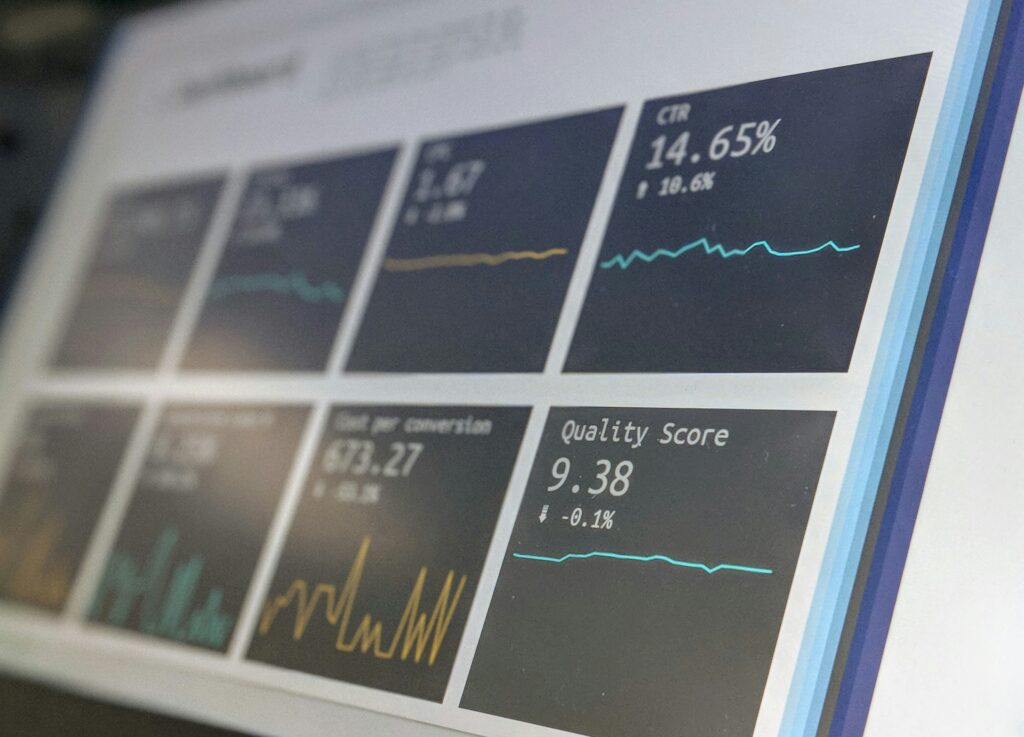
Data Quality
Ensure your data is accurate, consistent, and reliable through validation, monitoring, and continuous quality checks.
Meta Data Management
Manage and standardize data definitions, structures, and context to improve data understanding, governance, and usability.

Master Data Management
Create a single, consistent source of truth for critical business data like customers, products, and vendors across all systems.

Data Governance Tools
Implement the right tools to automate governance processes, enforce policies, and maintain control over your data environment.

The Hidden Cost of Poor Data Lineage
Most enterprises don’t realize their data has a visibility problem until something breaks, and by then, the damage is already done.
When data lineage is missing or incomplete, the consequences are immediate and expensive. Engineers spend hours tracing where a number came from instead of building. A single pipeline change breaks three downstream reports with no warning. Compliance teams scramble to reconstruct data trails manually when auditors arrive. AI models produce outputs no one can explain or defend because the input data has no traceable origin. And business leaders make critical decisions on reports where nobody can confirm the data is clean, current, or correctly transformed.
The risks are not abstract.
Regulatory frameworks like GDPR, CCPA, HIPAA, and SOX require organizations to know exactly where sensitive data lives, how it moves, and who touched it. Without data lineage, that proof doesn’t exist. Pipeline failures cascade silently across systems before anyone notices. Reports built on corrupted or misrouted data drive decisions that cost real money. And when an audit arrives, reconstructing data trails manually is not a contingency plan, it’s a liability. Poor data lineage is not a technical problem. It is a business risk.
What is Data Lineage and Why Does It Matter Now?
Data lineage is the complete, traceable record of how data moves through your organization, where it originates, how it gets transformed at each step, and where it ultimately lands. As data environments grow more complex and AI systems depend on clean, verifiable inputs, knowing your data’s journey is no longer optional. It is the foundation of trustworthy analytics, reliable AI, and defensible compliance.
It answers four fundamental questions every enterprise must be able to answer
Where does this data come from?
How has it been transformed?
Where does it flow next?
Can we trust what it's telling us?
A well-implemented data lineage system delivers measurable outcomes across the organization. It eliminates the guesswork behind where reports and metrics come from. It cuts the time engineers spend tracing broken pipelines from days to minutes. It gives compliance teams audit-ready documentation without manual reconstruction. And critically, it creates the transparent, traceable data foundation that modern AI and analytics systems depend on to produce results you can actually stand behind.

Our Data Lineage Services
We offer a complete, integrated data lineage tracking service designed for enterprise environments. Each capability works independently or as part of a broader data engineering and governance program, depending on where your organization is in its journey.
End-to-End Data Lineage Mapping
Data lineage mapping gives your organization a complete, visual record of how every data asset moves across your systems, from its original source through every transformation to its final destination.
Without lineage mapping, your data environment is effectively a black box. Engineers spend hours tracing where a broken metric originates. A change to one pipeline breaks three downstream reports with no warning. Compliance teams reconstruct data trails manually under audit pressure. A properly implemented lineage map solves this by making every data flow visible, traceable, and documented, so your teams can move fast without flying blind.
What we deliver
We design and deploy end-to-end lineage mapping that tracks data movement across your databases, pipelines, APIs, warehouses, and reporting layers. Every transformation is captured automatically, reducing the need for manual documentation. For a logistics enterprise managing data across seven source systems, implementing lineage mapping cut pipeline incident resolution time by over 70% and eliminated compliance reconstruction work entirely ahead of a SOX audit.


Data Flow Tracking & Impact Analysis
Every pipeline change, schema update, or system migration carries downstream risk. Data flow tracking gives your teams continuous visibility into how data moves between systems, and impact analysis tells you exactly what breaks before you make a change.
What we deliver
Our data flow tracking practice covers the full lineage stack: mapping active data flows across source systems, pipelines, and destinations to establish a live lineage baseline, identifying column-level dependencies and transformation logic, running automated impact analysis before schema or pipeline changes, and alerting teams when data flows deviate from expected behavior. We also implement lineage dashboards that give data engineers and business stakeholders a real-time view of how data moves across the systems they depend on.
For enterprises scaling AI or analytics programs, knowing the impact of every data change is the non-negotiable prerequisite. Broken pipelines are not just a technical inconvenience, they are a business interruption we help organizations prevent from day one.
Data Lineage Tracking
Do you know exactly where a piece of data came from, what transformations it passed through, and which reports or models depend on it today? If not, data lineage tracking is not just a gap, it is an active risk.
ata lineage provides a transparent, auditable map of how data flows through your organization, from source systems through storage layers to analytical outputs and AI models. This transparency is essential for compliance (regulators require documented proof of data origin and transformation history), impact analysis (knowing exactly what breaks before a source system changes), and root-cause investigation when data quality issues surface in reports or model outputs.
What we deliver
We implement automated lineage capture across your data pipelines, warehouses, APIs, and transformation layers, giving your engineers, analysts, and auditors a complete, continuously updated data trail without the manual effort of documentation. Lineage is captured at both dataset and column level, so dependencies are visible down to individual fields. Teams gain the ability to trace any metric back to its source, run change impact assessments before touching production systems, and produce audit-ready lineage reports on demand.


Lineage-Driven Compliance & Audit Readiness
Compliance is the context that makes data lineage urgent. Without traceable, documented data flows, your organization’s audit responses are manual reconstructions, time-consuming, error-prone, and impossible to scale under regulatory pressure.
Lineage-driven compliance involves maintaining continuously updated records of where sensitive data originates, how it is transformed at each stage, and which systems and users have interacted with it along the way. It ensures that when a GDPR data subject request arrives, or a SOX auditor asks how a financial metric was calculated, your team produces a precise, documented answer in minutes, not weeks. When a compliance analyst and a data engineer both trace the same field, they reach the same verified source.
What we deliver
We help enterprises implement lineage systems that satisfy regulatory classification requirements, including data origin tracking for GDPR, transformation histories for SOX, and field-level sensitivity mapping for HIPAA compliance, and integrate directly with your existing data governance and audit workflows to create a compliance-ready data environment your teams can defend under scrutiny.
Pipeline Lineage & Dependency Mapping
Undocumented pipeline dependencies, unknown transformation logic, and invisible data relationships are one of the most expensive and persistent problems data teams face. Pipeline lineage and dependency mapping resolves this by giving every team a clear, continuously maintained record of how data moves between systems and what each pipeline step actually does.
What we deliver
Our pipeline lineage practice covers ingestion pipelines, transformation layers, and output dependencies across your data warehouse, data lake, and operational systems. We map source-to-destination flows at both pipeline and column level, document transformation logic at each stage, identify cross-system dependencies that create downstream risk, and implement automated lineage capture so the map stays current as pipelines evolve, without relying on manual documentation.
The downstream impact is significant: faster root-cause resolution when pipelines fail, safer schema and system changes, more reliable AI training data with traceable origins, and materially reduced time spent on audit preparation and data incident response.


Data Lineage Tools & Platform Implementation
A data lineage program is only sustainable at enterprise scale when it is automated and enforced by the right tooling. We help enterprises evaluate, select, and implement data lineage platforms that capture lineage continuously, making traceability an always-on capability rather than a manual, point-in-time effort.
What we deliver
We have hands-on experience with leading lineage platforms including Apache Atlas, OpenLineage, Collibra, MANTA, Atlan, and Microsoft Purview. Our approach is vendor-neutral: we recommend the tools that fit your environment, data stack, and maturity level, not the tools we happen to be partnered with. We also handle full integration architecture, ensuring your lineage platform connects to your data warehouse, cloud storage, ETL pipelines, transformation layers, and BI layer for seamless, automated lineage capture across every system your data touches.
How We Implement Data Lineage: Our 4-Phase Approach
Data lineage implementations fail most often not because of technology, but because of poor scoping, incomplete system coverage, and lack of automation from the start. Our proven delivery model is designed to de-risk implementation at every stage and get your teams working with live lineage data as fast as possible.
Phase 1: Assessment and Discovery
Phase 2: Lineage Architecture Design
Phase 3: Implementation and Integration
Phase 4: Monitoring and Optimization
Why Enterprises Choose Acquirets for Data Lineage
Vendor-Neutral by Design
We don't push platforms. We assess your environment, recommend the lineage tooling that fits your stack and maturity level, and implement what works. Our advice is driven by your requirements, not by partner incentives.
Built for AI Readiness
Every lineage program we deliver is designed with AI and ML workloads in mind. Clean, traceable data origins, documented transformation logic, and verified pipeline dependencies aren't just good data hygiene, they are the foundational requirements for AI systems that produce outputs you can trust and defend.
Enterprise-Grade Delivery
We have deep experience working within the complexity of large organizations: multi-cloud environments, hybrid data architectures, cross-system pipeline dependencies, and multi-stakeholder alignment challenges. Our delivery model is structured to handle that complexity without disrupting your ongoing operations.
Cross-Industry Experience
Our team has implemented data lineage programs across financial services, healthcare, retail, manufacturing, technology, and the public sector. We bring industry-specific knowledge of regulatory requirements, data patterns, and pipeline architectures that generic consulting firms don't.
Long-Term Partnership
We don't implement lineage and disappear. We offer ongoing lineage monitoring, coverage expansion, and platform management for enterprises that want a strategic partner rather than a one-time vendor.
Data Lineage Across Industries
Financial Services Governance
Data lineage programs built to satisfy MiFID II, SOX, and BCBS 239 requirements, with full source-to-report traceability and audit controls that stand up to regulatory scrutiny.
Healthcare and Life Sciences
HIPAA-compliant lineage tracking with PHI flow documentation, transformation records, and access history across clinical, operational, and research data systems.
Retail and E-commerce
End-to-end lineage across product, inventory, and customer data pipelines, giving retail teams the traceability needed for consistent reporting, accurate personalization, and supply chain visibility.
Manufacturing Operational
Pipeline lineage spanning IoT data streams, ERP systems, and supply chain platforms ,enabling reliable operational reporting, predictive maintenance analytics, and traceable production data.
Technology and SaaS
Lineage frameworks that scale with product data growth, support multi-tenant data architectures, and give engineering and compliance teams visibility into how customer data flows across every system.
Government and Public Sector
Data lineage programs aligned with public sector transparency mandates, data sharing requirements, and security controls, including FedRAMP-relevant lineage documentation and audit trails.
Related Services
Data governance
Data lineage and data governance work hand in hand. Lineage provides the traceability that makes governance policies enforceable and auditable. Our data governance practice builds the ownership structures, policies, and controls that give your lineage program its authority.
AI Services
Governed, traceable data is the prerequisite for reliable AI. Our AI services practice builds on the lineage foundation you establish — delivering private LLM systems, AI-powered automation, and enterprise AI deployments that you can trust because the data underneath them is traceable and verified.
Cybersecurity Solutions
Data lineage and cybersecurity are deeply complementary. Lineage maps where sensitive data flows and who touches it — giving your security architecture the visibility it needs to enforce access controls, detect anomalies, and respond to incidents faster.
Data Engineering and AI Readiness
Data lineage depends on clean, well-structured pipelines. Our data engineering practice ensures your pipelines, warehouses, and transformation layers are instrumented and built to support automated lineage capture from the ground up.
Data Quality Management
Lineage tells you where data comes from. Data quality management ensures it arrives clean. Our data quality practice runs alongside lineage implementation to profile, validate, and monitor data at every stage of its journey across your systems.
AI Governance and Risk Management
For enterprises deploying AI, lineage extends beyond pipelines into model inputs, training data origins, and output traceability. Our AI governance practice addresses these requirements, covering model risk, bias monitoring, and explainability built on a verified data lineage foundation.
Frequently Asked Questions About Data Lineage
Data lineage is the complete, traceable record of how data moves through an organization — from its original source through every transformation, pipeline, and system it passes through, to its final destination in reports, dashboards, or AI models. It gives teams visibility into where data comes from, how it changes, and what depends on it, making it essential for compliance, impact analysis, and trustworthy analytics.
Data governance defines the policies, ownership structures, and standards that determine how data should be managed across an organization. Data lineage is the technical implementation that makes those policies traceable and enforceable — documenting exactly how data moves, transforms, and lands across your systems. Governance tells you the rules. Lineage shows you what is actually happening. Both are necessary, and the strongest data programs run them together.
It depends on the complexity of your data environment and the scope of coverage required. For organizations with well-structured pipelines and a defined starting point, an initial lineage implementation covering priority data domains typically takes six to ten weeks. Larger environments with multiple cloud platforms, legacy systems, and broad compliance requirements take longer. Our phased approach is designed to deliver usable lineage on priority pipelines quickly, rather than requiring a full buildout before any value is realized.
We have hands-on implementation experience with Apache Atlas, OpenLineage, Collibra, MANTA, Atlan, and Microsoft Purview, among others. Our approach is vendor-neutral — we assess your existing stack, data volumes, compliance requirements, and team capabilities before recommending a platform. We do not push tools based on partnerships. We recommend what actually fits your environment.
Dataset-level lineage tracks how tables and files move between systems. Column-level lineage goes deeper — it tracks individual fields through every transformation, join, aggregation, and calculation they pass through. This matters because most data quality issues, compliance questions, and impact analysis scenarios happen at the field level, not the table level. When an auditor asks how a specific financial metric was calculated, or when a schema change breaks a downstream report, column-level lineage gives your team a precise, field-by-field answer rather than a general system map.
AI models are only as reliable as the data they are trained and operated on. Data lineage gives AI teams visibility into where training data originates, what transformations it passed through before reaching the model, and whether those inputs have changed over time. When a model produces unexpected outputs, lineage makes root-cause investigation possible — tracing the issue back to a specific data source, pipeline change, or transformation error. For organizations deploying AI in regulated environments, lineage also provides the documentation needed to explain and defend model inputs to auditors and regulators.
Yes. Data environments are not static — pipelines change, new sources are added, and regulatory requirements evolve. We offer ongoing lineage monitoring, coverage expansion, and platform management after implementation. This includes lineage health checks, alerts when coverage gaps appear, updates as new pipelines and systems are introduced, and periodic reviews to ensure your lineage program stays accurate and complete as your data landscape grows.
Yes. We implement data lineage across cloud-native, on-premises, and hybrid environments. Whether your data infrastructure runs on AWS, Azure, Google Cloud, or spans a combination of cloud and legacy on-premises systems, our lineage architecture is designed to cover the full environment — not just the modern parts. Multi-cloud and hybrid deployments require careful integration design, which is a core part of our assessment and architecture phases.
The first step is a discovery call where we learn about your current data environment, the compliance or operational challenges driving your interest in lineage, and where you want to start. From there we scope an assessment engagement that gives you a clear picture of your lineage gaps, priority data flows, and a recommended implementation path. There is no obligation beyond the initial conversation. You can book a free consultation directly from this page.
Ready to Build a Data Pipeline Your Organization Can See and Trust?
Poor data lineage is not a technology problem waiting for a better tool. It is a visibility problem that requires the right architecture, the right implementation approach, and the right partner to solve it durably.
Acquirets brings the enterprise experience, the vendor-neutral perspective, and the implementation discipline to help you build a lineage program that works — one that your data engineers, your compliance teams, your business leaders, and your AI systems all depend on with confidence.