
Data Governance Tools
It's Time to Put the Right Data Governance Tools in Place for Your Organization
Stop managing governance manually. We help you evaluate, select, and implement the right data governance platforms so your policies, classifications, and controls are automated, enforced, and visible across your entire data ecosystem at scale.
At Acquirets, we help enterprises identify and deploy the data governance tools that fit their environment, their compliance requirements, and their team capabilities — so your governance program runs continuously, your regulators stay satisfied, and your AI investments are built on a technology foundation that actually holds up in production.

Data Catalogs
Centralize and organize your data assets with searchable catalogs, making it easy for teams to discover, understand, and use the right data quickly.
Data Quality
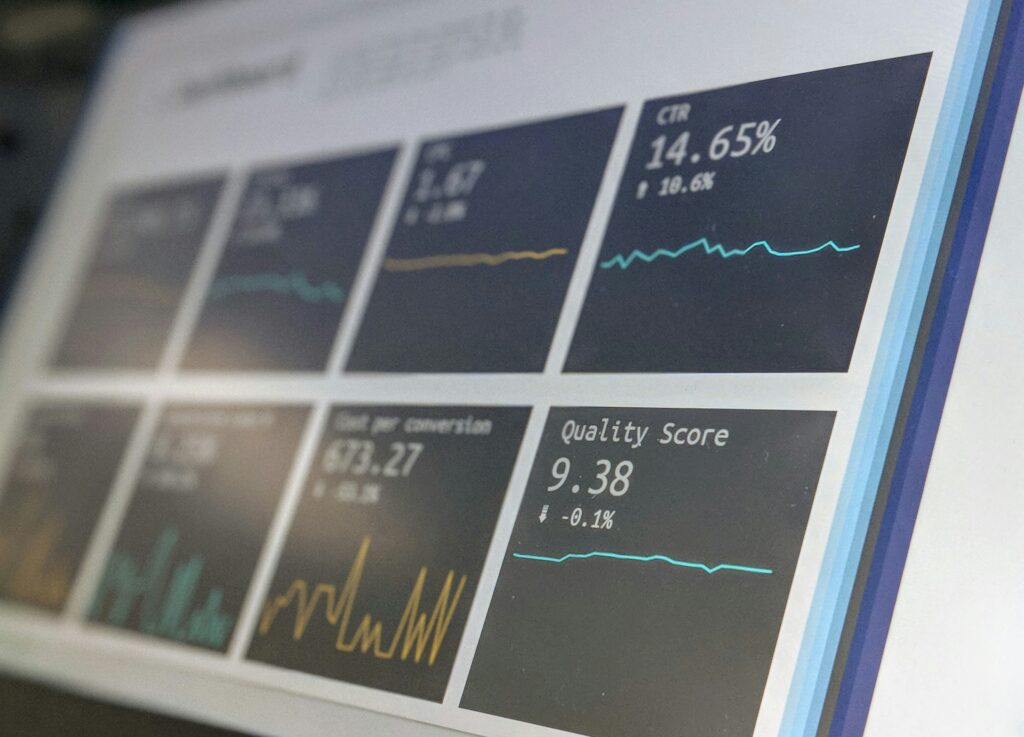
Ensure your data is accurate, consistent, and reliable through validation, monitoring, and continuous quality checks.

Data Lineage
Track how data flows across systems, from source to destination, ensuring transparency, traceability, and easier impact analysis.
Meta Data Management
Manage and standardize data definitions, structures, and context to improve data understanding, governance, and usability.

Master Data Management
Create a single, consistent source of truth for critical business data like customers, products, and vendors across all systems.

The Hidden Cost of the Wrong Data Governance Tools
Most enterprises don’t realize how much their governance problems stem from missing or mismatched tooling until manual workarounds become impossible to sustain.
When data governance tools are absent, poorly implemented, or misaligned with the environment, the consequences compound quickly. Governance policies exist on paper but are never enforced automatically across systems. Business leaders make critical decisions based on reports nobody can trace or validate. Data engineers spend hours on manual classification, lineage reconstruction, and quality checks that the right tooling would handle automatically. AI and machine learning models are deployed on data with no documented controls, creating compliance exposure that grows with every release. And when a regulatory audit arrives, the scramble to pull together access logs, data classifications, and lineage records from disconnected systems becomes a costly, time-consuming emergency.
The risks are not abstract.
Regulatory violations under GDPR, CCPA, HIPAA, and SOX carry significant financial penalties — and regulators increasingly expect automated, auditable controls, not manual spreadsheets. Data breaches that stem from ungoverned access and unclassified sensitive data damage both balance sheets and reputations. And in a competitive landscape where AI-driven organizations are pulling ahead, enterprises running governance programs without the right tooling fall further behind every quarter. The wrong data governance tools are not an IT inconvenience. They are a business liability.
What are Data Governance Tools and Why Do They Matter Now?
Data governance tools are the platforms, applications, and automated systems that operationalize your governance policies across your data ecosystem, turning manual processes into enforced, auditable controls. They handle data cataloging, classification, lineage tracking, access management, quality monitoring, and compliance reporting at a scale and consistency that no manual program can sustain. As data environments grow more complex, regulatory requirements tighten, and AI adoption accelerates, having the right tooling in place is no longer optional, it is what separates governance programs that hold up under scrutiny from those that collapse when tested.
It answers four fundamental questions every enterprise must be able to answer
Do we have the right tools in place?
Are our governance policies actually being enforced?
Can we prove compliance when asked?
Is our tooling keeping up with our data growth?
The right data governance tools deliver measurable outcomes across the organization. They reduce data incidents by automating the controls that manual processes miss. They accelerate regulatory compliance by making classification, lineage, and access documentation continuous rather than reactive. They shorten the time engineers and analysts spend on manual governance tasks so they can focus on building. And critically, they create the automated, enforced data foundation that modern AI and analytics systems depend on to produce outputs organizations can actually stand behind.

Our Data Governance Tool Services
We offer a complete, vendor-neutral suite of data governance tool evaluation, selection, and implementation services designed for enterprise environments. Each engagement works as a standalone platform deployment or as part of a broader governance program, depending on where your organization is in its tooling journey.
Governance Platform Selection & Assessment
A governance platform assessment gives your organization a clear, objective view of which tools are available, which ones fit your environment, and which one is worth investing in before you commit to a multi-year deployment.
Without a structured assessment, platform selection becomes a vendor sales process rather than a business decision. Organizations end up purchasing tools based on demos rather than fit, deploying platforms their teams never adopt, or discovering post-implementation that the tool cannot integrate with half their data stack. A well-run governance platform assessment solves this by evaluating available tools against your specific environment, compliance requirements, team capabilities, and budget, so the platform you select is one your organization can actually implement, adopt, and scale.
What we deliver
We conduct structured governance platform assessments that evaluate leading tools including Collibra, Alation, Atlan, Microsoft Purview, and Informatica against your specific requirements, produce a scored, documented recommendation with clear rationale, and support vendor negotiation so you go into procurement with independent advice rather than vendor-supplied comparisons. For a healthcare enterprise evaluating four governance platforms, our assessment process reduced tool selection time by over 60% and prevented a platform mismatch that would have required a costly re-implementation within two years.

Governance Tool Implementation & Integration
Every downstream governance policy, compliance control, and AI safeguard is only as reliable as the tooling enforcing it. Governance tool implementation ensures your selected platform is deployed correctly, integrated with your existing data stack, and configured to enforce your policies continuously, not just during the initial setup.
What we deliver
Our governance tool implementation practice covers the full deployment lifecycle: configuring your governance platform to reflect your specific policies, taxonomies, and access controls, integrating with your data warehouse, pipelines, BI layer, and source systems to enable automated metadata capture and policy enforcement, implementing role-based access controls and audit logging across connected systems, and setting up monitoring dashboards and alerts when governance coverage gaps or policy violations are detected. We also implement governance scorecards that give data owners, compliance teams, and business stakeholders real-time visibility into the health and coverage of the governance controls they depend on.
For enterprises deploying AI or scaling analytics programs, properly implemented governance tooling is the non-negotiable prerequisite. A misconfigured governance platform is not a technical inconvenience, it is a compliance liability we help organizations avoid from day one.
Governance Tool Training & Adoption
Do you know whether your teams are actually using the governance platform you deployed, whether policies are being followed consistently, and whether data owners understand their responsibilities within the tool? If not, your governance tool investment is at risk of becoming shelfware.
Governance tool adoption is where most implementations quietly fail. The platform is deployed and configured correctly, but teams revert to old habits because nobody trained them properly, workflows were not designed around how they actually work, and the tool feels like overhead rather than help. Structured training and adoption programs solve this by embedding governance tool usage into daily workflows (making compliance the path of least resistance), building role-specific competency across data owners, stewards, and business users, and establishing feedback loops that surface adoption gaps before they become program failures.
What we deliver
We design and deliver governance tool training and adoption programs that cover role-specific platform training for data engineers, data stewards, analysts, and business stakeholders, workflow integration to embed governance tasks into existing team processes, adoption dashboards that track platform usage, policy compliance rates, and stewardship activity across your organization, and ongoing enablement support to keep adoption healthy as teams, roles, and platform capabilities evolve.


Governance Tool Health Checks & Optimization
A governance tool is only as effective as the configuration running inside it. Without regular health checks, policy rules drift, coverage gaps accumulate, and the platform that was working well at launch quietly stops enforcing the controls your organization depends on.
Governance tool optimization involves auditing your current platform configuration against your active policies, identifying where enforcement has lapsed, coverage has degraded, or integrations have broken as your data environment evolved. It ensures that when a compliance team runs an access report or a data owner reviews classification coverage, the results reflect the actual state of your data environment — not the state it was in when the tool was first configured eighteen months ago.
What we deliver
We help enterprises run structured governance tool health checks that audit policy configuration, integration coverage, access control accuracy, and classification completeness across your platform, identify optimization opportunities to improve enforcement consistency and reduce false positives, support regulatory readiness reviews by validating that your tooling meets current GDPR, CCPA, and HIPAA requirements, and integrate findings into a prioritized remediation plan your team can act on without a full reimplementation.
Governance Tool Migration & Upgrade Services
Outdated governance platforms, failed legacy implementations, and tools that no longer fit a growing data environment are one of the most common and expensive situations enterprises face. Governance tool migration and upgrade services resolve this by moving your governance program to the right platform cleanly, without losing existing policies, metadata, or classification work in the process.
What we deliver
The downstream impact is significant: governance continuity with no policy gaps during transition, cleaner platform configuration compared to the legacy system, more reliable enforcement across your current data stack, and materially reduced technical debt from tools that were never properly implemented in the first place.


Data Governance Tools & Platform Implementation
A governance program is only sustainable at enterprise scale when it is automated and enforced by the right platform. We help enterprises evaluate, select, and implement data governance tools that operationalize your policies continuously — making governance an always-on, enforced capability rather than a periodic manual project.
What we deliver
We have hands-on implementation experience with leading governance platforms including Microsoft Purview, Collibra, Alation, Atlan, Informatica, and Apache Atlas. Our approach is vendor-neutral: we recommend the tools that fit your environment, compliance requirements, team capabilities, and budget — not the tools we happen to be partnered with. We handle full integration architecture ensuring your governance platform connects to your data warehouse, cloud storage, ETL pipelines, BI layer, and source systems for seamless, automated policy enforcement and compliance reporting across every environment your data touches.
How We Implement Data Governance Tools: Our 4-Phase Approach
Governance tool implementations fail most often not because the platform is wrong, but because of poor requirements definition, insufficient integration planning, and lack of structured adoption from the start. Our proven delivery model is designed to de-risk tool implementation at every stage and get your teams working with enforced, automated governance as fast as possible.
Phase 1: Requirements & Tool Assessment
Phase 2: Platform Configuration & Integration Design
Phase 3: Implementation and Integration
Phase 4: Monitoring and Optimization
Why Enterprises Choose Acquirets for Data Governance Tools
Vendor-Neutral by Design
We don't push platforms. We assess your environment, evaluate the tools that fit your compliance requirements and data stack, and implement what works. Our advice is driven by your requirements, not by vendor partnerships or reseller incentives.
Built for AI Readiness
Every governance tool implementation we deliver is designed with AI and ML workloads in mind. Automated policy enforcement, consistent classification, auditable access controls, and documented data lineage are not just good governance hygiene — they are the foundational controls that AI systems operating in regulated environments require to be trusted and defended.
Enterprise-Grade Delivery
We have deep experience deploying governance tools within the complexity of large organizations: multi-cloud environments, hybrid data architectures, legacy system integrations, regulatory constraints, and multi-stakeholder alignment challenges. Our delivery model is structured to handle that complexity without disrupting your ongoing operations.
Cross-Industry Experience
Our team has implemented governance tools across financial services, healthcare, retail, manufacturing, technology, and the public sector. We bring industry-specific knowledge of regulatory requirements, platform integration patterns, and organizational governance dynamics that generic consulting firms don't.
Long-Term Partnership
We don't implement a governance platform and disappear. We offer ongoing tool monitoring, configuration optimization, coverage expansion, and platform management for enterprises that want a strategic partner rather than a one-time vendor.
Data Governance Across Industries
Financial Services Governance
Governance tool implementations built to satisfy MiFID II, SOX, and BCBS 239 requirements — with automated policy enforcement, access controls, lineage tracking, and audit logging configured to produce the regulatory evidence financial services organizations need on demand.
Healthcare and Life Sciences
HIPAA-compliant governance tool deployments with PHI classification automation, access control enforcement, and data quality frameworks that ensure clinical, operational, and research data is governed, protected, and audit-ready across every system that handles sensitive patient information.
Retail and E-commerce
Governance tool implementations across product, customer, and inventory data environments — automating classification, access controls, and data quality monitoring to keep retail data consistent, personalization accurate, and compliance obligations met across every channel and platform.
Manufacturing Operational
Governance tool deployments spanning IoT, ERP, and supply chain systems — automating data classification, access management, and quality controls across operational environments to support reliable reporting, predictive analytics, and regulatory compliance across facilities and regions.
Technology and SaaS
Governance tool frameworks that scale with product and customer data growth, support multi-tenant governance architectures, and give engineering and compliance teams automated policy enforcement and audit capabilities across every environment and customer data domain they manage.
Government and Public Sector
Governance tool programs aligned with public sector transparency mandates, data sharing requirements, and security classification standards — including automated access controls, sensitivity tagging, and audit logging designed to meet FedRAMP-relevant governance requirements.
Related Services
Data governance
Governance tools operationalize your governance program — but the program itself needs clear policies, ownership structures, and standards to enforce. Our data governance practice designs the framework that your governance tools are configured to implement and maintain.
AI Services
Governed data is the prerequisite for reliable AI. Our AI services practice builds on the governance tool foundation you establish, delivering private LLM systems, AI-powered automation, and enterprise AI deployments that you can trust because the access controls, classification, and lineage tracking underneath them are automated and enforced.
Cybersecurity Solutions
Governance tools and cybersecurity are deeply complementary. The access controls, classification policies, and sensitivity labels your governance platform enforces are only as strong as the security architecture protecting them. Our cybersecurity practice ensures your governance tool configurations are backed by infrastructure-level security controls.
Data Engineering and AI Readiness
Governance tools are only as effective as the data infrastructure they connect to. Our data engineering practice ensures your pipelines, warehouses, and transformation layers are built and instrumented to support automated governance enforcement from the ground up.
Metadata Management
Governance tools enforce policies on data. Metadata management ensures that data is documented, defined, and classified correctly before those policies are applied. Our metadata management practice works alongside governance tool implementations to ensure your platform is populated with accurate, complete metadata from day one.
AI Governance and Risk Management
For enterprises deploying AI, governance tools extend beyond data into model access controls, input documentation, and output auditability. Our AI governance practice addresses these requirements, ensuring your governance platform covers not just your data assets but the AI systems operating on them.
Frequently Asked Questions About Data Governance Tools
Data governance tools are the platforms and automated systems that operationalize governance policies across your data environment — handling data cataloging, classification, access control enforcement, lineage tracking, quality monitoring, and compliance reporting at a scale and consistency that manual processes cannot sustain. They turn governance from a set of documented policies into a continuously enforced, auditable program that runs across your entire data ecosystem without requiring constant manual intervention.
A data governance framework defines the policies, ownership structures, standards, and processes that determine how data should be managed across your organization. Data governance tools are the platforms that implement and enforce those policies automatically across your data environment. The framework tells your systems what to do. The tools make sure it actually happens — continuously, at scale, and with an audit trail. Neither is sufficient without the other: a framework without tools relies on manual enforcement that breaks down at scale, and tools without a framework enforce the wrong things or nothing at all.
It depends on the platform selected, the complexity of your data environment, and the scope of governance domains in scope. For organizations with a well-defined governance framework and a focused initial deployment, a governance platform implementation typically takes eight to twelve weeks. Broader deployments covering multiple data domains, complex system integrations, and enterprise-wide rollout take longer. Our phased approach is designed to deliver enforced, visible governance on your highest-priority domain quickly rather than requiring a full enterprise rollout before any value is realized.
We have hands-on implementation experience with Microsoft Purview, Collibra, Alation, Atlan, Informatica, and Apache Atlas, among others. Our approach is strictly vendor-neutral. We assess your existing data stack, compliance requirements, team capabilities, and budget before recommending a platform. We do not push tools based on partnerships or reseller relationships. We recommend what actually fits your environment and delivers the governance outcomes your organization needs.
GDPR and CCPA both require organizations to know what personal data they hold, where it is stored, how it is classified, who can access it, and how it is processed. Governance tools automate the classification, access control enforcement, and audit logging that make these requirements continuously verifiable rather than manually reconstructed under audit pressure. When a regulator requests evidence of your data handling practices, a properly implemented governance platform produces that evidence from a live, continuously maintained record — not from a manual investigation that takes weeks and leaves gaps.
The most important evaluation criteria are integration depth, automation capability, and adoption design. Integration depth determines whether the platform can actually connect to your existing data warehouse, pipelines, BI tools, and source systems — a platform that only governs part of your environment creates false confidence. Automation capability determines whether classification, lineage capture, and policy enforcement happen continuously or require manual triggers. Adoption design determines whether the platform is usable by data stewards and business users, not just engineers. Beyond these three, compliance coverage, scalability, and total cost of ownership are the factors that separate platforms worth deploying from those that become expensive shelfware.
AI systems require governed data inputs to produce reliable, explainable, and defensible outputs. Data governance tools ensure that the data feeding your AI systems is classified, access-controlled, quality-monitored, and lineage-tracked before it reaches the model. When an AI system produces an unexpected output or faces a regulatory review, governance tool audit logs and lineage records provide the documentation needed to explain what data was used, how it was classified, and who had access to it. For organizations operating AI in regulated environments, governance tool coverage is not optional — it is the infrastructure that makes AI deployment defensible.
Yes. Governance tool environments are not static. New data sources are added, regulatory requirements change, platform updates introduce new capabilities, and policy configurations drift over time without active management. We offer ongoing governance tool monitoring, configuration optimization, coverage expansion, and platform management after implementation. This includes regular health checks, policy compliance reviews, coverage gap remediation, and platform updates as your data environment and regulatory obligations evolve.
Yes. We implement governance tool programs across cloud-native, on-premises, and hybrid environments. Whether your data infrastructure runs on AWS, Azure, Google Cloud, or spans a combination of cloud and legacy on-premises systems, our governance tool architecture is designed to enforce policies and capture metadata across the full environment. Multi-cloud and hybrid deployments require careful integration design to ensure governance coverage is complete and consistent across all systems, which is a core part of our requirements assessment and platform configuration phases.
The first step is a discovery call where we learn about your current data environment, the governance gaps or compliance requirements driving your interest in tooling, and whether you are starting from scratch or looking to replace or optimize an existing platform. From there we scope a requirements assessment that gives you a clear platform recommendation, integration plan, and implementation roadmap. There is no obligation beyond the initial conversation. You can book a free consultation directly from this page.
Ready to Put the Right Data Governance Tools in Place?
Choosing and implementing governance tools is not just a technology decision. It is an organizational commitment that requires the right requirements process, the right vendor-neutral guidance, and the right implementation partner to get it right the first time.
Acquirets brings the enterprise experience, the vendor-neutral perspective, and the implementation discipline to help you select and deploy governance tools that actually work, tools that your data teams adopt, your compliance requirements are met by, your regulators can audit, and your AI systems depend on with confidence.